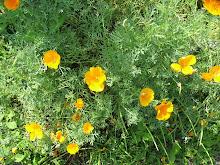
Some of the other perennials in bloom include pulmonaria, lemon balm, and pachysandra, and the hostas, ferns, and lily of the valley are poking out of the ground and starting to unfurl their leaves. After all of the dreary weather and flooding of the early spring, it's nice to see them return. It's too early to tell which diseases or pests will surface from this disruption from the norm, though I've heard we may be visited by an overabundance of winter moths.
Showing posts with label peas. Show all posts
Saturday, April 24, 2010
Now in bloom at home
Some of the other perennials in bloom include pulmonaria, lemon balm, and pachysandra, and the hostas, ferns, and lily of the valley are poking out of the ground and starting to unfurl their leaves. After all of the dreary weather and flooding of the early spring, it's nice to see them return. It's too early to tell which diseases or pests will surface from this disruption from the norm, though I've heard we may be visited by an overabundance of winter moths.
Sunday, March 28, 2010
Observing some traditions, forsaking others
Armed with my dysfunctional digital camera, I set out on this last sunny March weekend day to keep up with my growing traditions as well as experience how others respond to plant life. In the late morning I headed over to my plot at the Minton Stable Garden and turned over some of the soil for the first time in 2010. With a few breaks to chat with others passing through, I managed to dig up about a third of the plot, exhume the skeletons of last fall's broccoli, and sow the following: Forellenshluss Romaine Lettuce (a success from last year that I hope to repeat), Summertime Iceberg (for the younger taste buds), and Tyee Spinach (which Fedco sent as a substitute for the Space I had ordered). I repeated the same planting later in the afternoon in my backyard raised bed.
Around 2:00 I was back in JP, to pick up my friend Kim and head down to to Mobius, an experimental arts organization in Boston's South End, for an event that had intrigued us, the Alternative Experimental Flower Show. We had attended the traditional flower show on and off for years, but despite the change in venue (Boston's World Trade Center) and main sponsor (formerly Massachusetts Horticultural Society, now Paragon Group), we could already envision the types of exhibits we'd encounter for the $20 we'd end up spending (although I do regret missing a display that Asa, a fellow Steering Committee member, had some involvement in assembling). We were looking forward to spending only $5 to support a great non-profit and not knowing what to expect.
Outside the entrance, we encountered the bouquets of flowers that we assumed that people had brought the past few nights as part of the admission fee to the dances and other live performances. Inside, Kim took advantage of a rare opportunity--she became a plant, potted by one of the artists, Cathy Nolan Vincevic. She removed her shoes, stepped into a pot, then Cathy added some potting soil and greenery. Feet buried in the dirt, Kim sensed what it was like to have a strong root system. She asked how she should behave, a little surprising given her extensive knowledge as a gardener, and her friend Marlo and I suggested that she face the sun. Other works in the exhibit included bananas and banana peels arranged like flowers (by Ursula Ziegler) and Bill Evertson's "Thorns in the Garden," where the visitor watches a looping video of various scenes of environmental destruction through a telescope and has the opportunity to buy fake seed packets with colorful images of mushroom clouds over fields of flowers and maps of chemical weapons storage sites. Deborah Bohnert, who has been giving away much of her art over the course of her career, made sure we didn't leave without one of her elegant pyramid-shaped potpourri pieces.
The installations provided a much-needed contrast to the traditional flower show exhibits. Instead of cordoning plant life off from human contact, we were encouraged to mingle with it in some cases, witness how it must hold up in the face of other forces, whether they be environmental or cultural (such as how they are portrayed in origami and other mediums), and see floral features in other objects.
Later at home, as the skies began to cloud foreshadowing a soggy week ahead, I decided to be proactive and start some snap peas indoors. Reading a post from Dan's blog last week, I was reminded how the seeds that had germinated under the grow lights last season fared much better than those that I had sown directly into my backyard garden. I did plant some last weekend but it's still too early to tell how they'll do. I brought my peat pots indoors and added them to the other occupants under the grow lights, including my Black Prince tomatoes (above) and Piricicaba broccoli (below). So far, I feel I should have taken my delphinium seed money and bought a nice cup of coffee instead, but at least most my vegetables are progressing normally.
Outside the entrance, we encountered the bouquets of flowers that we assumed that people had brought the past few nights as part of the admission fee to the dances and other live performances. Inside, Kim took advantage of a rare opportunity--she became a plant, potted by one of the artists, Cathy Nolan Vincevic. She removed her shoes, stepped into a pot, then Cathy added some potting soil and greenery. Feet buried in the dirt, Kim sensed what it was like to have a strong root system. She asked how she should behave, a little surprising given her extensive knowledge as a gardener, and her friend Marlo and I suggested that she face the sun. Other works in the exhibit included bananas and banana peels arranged like flowers (by Ursula Ziegler) and Bill Evertson's "Thorns in the Garden," where the visitor watches a looping video of various scenes of environmental destruction through a telescope and has the opportunity to buy fake seed packets with colorful images of mushroom clouds over fields of flowers and maps of chemical weapons storage sites. Deborah Bohnert, who has been giving away much of her art over the course of her career, made sure we didn't leave without one of her elegant pyramid-shaped potpourri pieces.
The installations provided a much-needed contrast to the traditional flower show exhibits. Instead of cordoning plant life off from human contact, we were encouraged to mingle with it in some cases, witness how it must hold up in the face of other forces, whether they be environmental or cultural (such as how they are portrayed in origami and other mediums), and see floral features in other objects.
Thursday, February 11, 2010
Things learned while ordering seeds
I am finally getting around to ordering seeds, once again, through Fedco. I'm aware of the existence of other reputable companies, but have decided to stick with Fedco because of 1) convenience--this was the only catalog I have received and I have been too busy to explore alternatives, 2) success I've had with most of the varieties I've purchased, and 3) their cool catalog, minimalist in style with its black-and-white newsprint, but full of commentary and interesting factoids. Yesterday, while anticipating the Boston snowstorm that wasn't, I tore out the form and began painstakingly transcribing the correct codes for my upcoming crops. I ended up with a few of last year's successes, a few that have worked well for other gardeners in the area, and other vegetables/herbs and varieties I haven't yet grown. I'm still compiling my list, but for this post I thought I'd share some information, new to me.
Black Prince Tomato: Fedco had not offered this variety for thirteen years because when it was first sold, the company "could not find a market for it." Now Google "black prince tomato" and most of the links up front are from other seed merchants, probably due to the popularity of heirlooms nowadays, and for the variety's rich flavor. According to one online source, this Siberian tomato originated in Irkutsk, Russia, and is known for its health benefits due to its abundance of the antioxidant lypocene. Though other reports indicate that the plant has grown successfully in western and southern regions of the US, I'm going to give the Black Prince a chance here in New England. Since it also grows well in cold climates in Russia, maybe if I try growing it, Murphy's Law will take effect and we'll end up having a warmer summer.
Catnip: The fact that our cat (above, one of my daughter's many photos) goes crazy for catnip is enough reason to order it, but the Fedco catalog states that this herb can calm mild stomach disorders, aid sleep, and lower fevers if added to tea. Rats hate it, and crushing and rubbing it on the skin can repel mosquitoes better than DEET (according to an Iowa State University study).
Sugar Ann Snap Pea: I had mixed results growing it last season but it could have been worse. Fedco's crop was blown away by a hurricane. As a result, it's not available in 2010, so I'm ordering Cascadia instead.
Black Prince Tomato: Fedco had not offered this variety for thirteen years because when it was first sold, the company "could not find a market for it." Now Google "black prince tomato" and most of the links up front are from other seed merchants, probably due to the popularity of heirlooms nowadays, and for the variety's rich flavor. According to one online source, this Siberian tomato originated in Irkutsk, Russia, and is known for its health benefits due to its abundance of the antioxidant lypocene. Though other reports indicate that the plant has grown successfully in western and southern regions of the US, I'm going to give the Black Prince a chance here in New England. Since it also grows well in cold climates in Russia, maybe if I try growing it, Murphy's Law will take effect and we'll end up having a warmer summer.
Sugar Ann Snap Pea: I had mixed results growing it last season but it could have been worse. Fedco's crop was blown away by a hurricane. As a result, it's not available in 2010, so I'm ordering Cascadia instead.
Thursday, October 29, 2009
Winterization bearing down
The deadline at the Minton Stable Garden for winterizing one's plot is November 1. By this date gardeners are expected to cut back perennials, clear out annuals, and remove all of the fencing, tools, supports, bags of soil, and other items. The water has been shut off for the season, and only one more work day has been scheduled for the unfortunate few still needing to fulfill their four-hour requirement (or else their plot will be given to one of the thirty people on the waiting list).
However, my raspberries and broccoli haven't received the memo. The rainy fall conditions have prolonged the growing season for both, with new berries for the former and the continued production of sideshoots for the latter. Otherwise, most everything else is ready to go. I had forgotten (or have been too embarrassed) to take a photo of my bean supports that fell over weeks ago. The tomatoes and peas are gone, and the perennials have been deadheaded but ready to be trimmed back completely. In about another week, material to be composted offsite will probably overflow on this tarp.
One of my post ideas for earlier this summer was to showcase the elaborate supports built by my fellow gardeners. Some have been taken down already while others have the skeletal remains of whatever they supported clinging to them. Grotesquely bulging and overripe beans. Blighted tomato stems rotting against metal rings. If not slimy to the touch then crinkling from dryness. It's a shame I never got around to executing this idea, but there's always next season.
Here are a few photos of what's still up. A lean-to that the creator had intended for cucumbers (notice the nice brussel sprouts next to it).
One substantial setup that once had peas climbing up strings, and still supporting the highest cosmos I've ever seen.
One of several pea trellises made from pipes, broomsticks, and chicken wire.
And one of my favorites: the arch connecting two raised beds designed for the handicapped. As in previous years, that will stay up throughout the winter, poking out from the snowbanks.
Here are a few photos of what's still up. A lean-to that the creator had intended for cucumbers (notice the nice brussel sprouts next to it).
Labels:
broccoli,
fall,
peas,
perennials,
pole beans,
raspberries,
work hours
Monday, October 5, 2009
Monday harvest/plot update - The cleanup continues
Previous benefits total: $131.80
1/5 pound (estimated) pole beans: $0.20
New benefits total: $132.00
Current costs total: $171.57
New balance: -$39.57
Short on time this evening. More totals to come in a future post.
Labels:
broccoli,
compost,
peas,
pole beans,
raspberries,
strawberries,
tomatoes,
value of harvest
Monday, September 28, 2009
Monday harvest post - last tomatoes
It's Monday again, time for another report about the past week's harvest. You can also check out the yields of other garden bloggers who have added their links to the bottom of Daphne's post. It seems that as I write this, there are only a few of us diehards participating this week. Hopefully, for the sake of the other gardeners, it's because they are simply too busy and not because they have nothing to report.
In my case, I think I'll be counting the number of upcoming harvest posts on one hand. On Saturday, I picked what I believe to be my last standard-size tomato, from one of my front-porch containers. As you can see by the photo below, calling it standard in size is a bit of a stretch. The others, in the first photo, came out of my Minton Stable Garden plot, and as usual, I'm showing their unblighted sides. You may also notice that I'm getting a few snap peas from my fall plants that have only grown about 8 inches high. I probably have a few more but I have been so unimpressed that when I visited the MSG today, I had forgotten to check.
The best news of the past week is the arrival of more raspberries on my new plants; I may actually accumulate enough to fill one of those small containers. I'll do another not-so-scientific estimate of their value after I pick a few more. I found out that organic broccoli was going for $2 a pound at the farmer's market, and since I don't have any idea how much I have picked in weight since I last included them in my tally, I'll postpone my estimate another week until I weigh and buy some and use that information to make another estimate. No science fair awards for me!
So, just tomatoes and pole beans in my tally this week:
Previous benefits total: $127.05
1/4 pound (estimated) of green beans at $0.99/lb.: $0.25
1 1/2 pounds (estimated) of organically grown tomatoes at $3/lb.: $4.50
New benefits total: $131.80
Current costs total: $171.57
New balance: -$39.77
As I have said before, I am tallying my harvest out of curiosity and do not pursue gardening to save money on food expenses. But I can still look on the bright side: I haven't spent any money on the vegetable garden in weeks.
Labels:
blogging,
broccoli,
peas,
pole beans,
raspberries,
tomatoes,
value of harvest
Saturday, September 12, 2009
Early/Late Benefits of Gardening update
Another rainy Saturday in Boston. The potluck barbecue that the Minton Stable Garden and Stonybrook Neighborhood Association were planning to hold today has been postponed until tomorrow. The JP World's Fair, which was supposed to happen rain or shine, ended up being canceled. So here I am at home hosting a playdate indoors, seems like a good time to get caught up on the blog. Since Monday's post will probably cover the barbecue, I'll break from tradition and tally my harvest today, so this post in one way is early. However, since I had no update last Monday of money saved this post is late.
My harvest seems to be winding down. The cooler temperatures of fall are already here, yet my vegetables still need summer to progress. As a result, many of my pole beans seem to be stuck in an infant state, tomatoes are ripening more slowly, and broccoli side-shoot production is down from last week. My fall snap peas are around 8 inches high and already flowering (actually, that may be due to the warmer temperatures of late August/early September). Temps should be returning to the 70s starting tomorrow, so I haven't lost hope.
Earlier this past week one of the neighbors had spotted and reported a garden thief who was helping herself to whatever produce she could grab. When I visited the garden the next day, I couldn't find any tomatoes in my plot ripe enough to harvest, but I doubt the thief was attracted to my plot as there are many redder and more reachable fruits in other plots. On Friday, I found one of these tomatoes in the above photo (excuse the silliness) on the ground, and the other had some rot on the other side. Because the plants had been healthy for most of the summer, I had ruled out late blight, but now I'm starting to notice that the rotted sections on the fruit that look more and more like this fungus. Since I haven't had this problem in other years and the epidemic is so widespread, I now suspect that tomatoes have fallen victim to it as well.
As for tallying the value of last week's and this week's harvest, I took a blighted tomato out of the equation, and the amount of broccoli and cherry tomatoes is negligible. The price of organically-grown tomatoes has come down a little, but green beans remain constant at 99 cents a pound, though in one place they were $1.59.
Previous benefits total: $110.73
1 pound (estimated) of green beans at $0.99/lb.: $0.99
4 pounds (estimated) of tomatoes at $3/lb.: $12.00
New benefits total: $123.72
Current costs total: $171.57
New balance: -$47.85
With less harvesting to do, I have more time to deadhead, as you see below. Fewer flowers hanging over the path, and a little space for the zinnias, which are finally blooming.
My harvest seems to be winding down. The cooler temperatures of fall are already here, yet my vegetables still need summer to progress. As a result, many of my pole beans seem to be stuck in an infant state, tomatoes are ripening more slowly, and broccoli side-shoot production is down from last week. My fall snap peas are around 8 inches high and already flowering (actually, that may be due to the warmer temperatures of late August/early September). Temps should be returning to the 70s starting tomorrow, so I haven't lost hope.
As for tallying the value of last week's and this week's harvest, I took a blighted tomato out of the equation, and the amount of broccoli and cherry tomatoes is negligible. The price of organically-grown tomatoes has come down a little, but green beans remain constant at 99 cents a pound, though in one place they were $1.59.
Previous benefits total: $110.73
1 pound (estimated) of green beans at $0.99/lb.: $0.99
4 pounds (estimated) of tomatoes at $3/lb.: $12.00
New benefits total: $123.72
Current costs total: $171.57
New balance: -$47.85
With less harvesting to do, I have more time to deadhead, as you see below. Fewer flowers hanging over the path, and a little space for the zinnias, which are finally blooming.
Labels:
peas,
pole beans,
tomatoes,
value of harvest,
zinnias
Monday, August 31, 2009
The benefits of gardening: Monday harvest tally
The encouraging news of the past week is that two of my tomato varieties, Cosmonaut Volkov and Rose de Berne, have grown with little or no rot or other issues. Some of the fruits are now the size of tennis balls; given the challenges presented by the rainy and unseasonable weather that's no small feat. However, they are still a shade of light green that would be perfectly appropriate if I were growing Granny Smith apples instead.
Now to my Cherokee Purples: As you can see from the above photo of Saturday's soggy harvest I had decided not to wait until they reddened some more. I am showing you the more flattering side of these tomatoes. Turn them around or over and you would find soft rot, holes that may have been bored by some unidentified pest, or cracks. Actually, once I cut into one of them I discovered that the damage was not as extensive as I had thought. Hopefully these will stay fresh for another day or two and I can pick a few others to make salsa.
This past Wednesday I harvested the broccoli side shoots that are pictured below. At the farmer's market on Saturday, an organic grower was charging $2.50 for one of those square cardboard containers often used to package cherry tomatoes or berries. I estimate that my yield could fill half of one of those boxes.
The pole beans keep coming, more than I had expected. They are still fetching 99 cents a pound, which is about the sum of the two harvests from the past week. As for the price of organically grown tomatoes, I have seen $4.50 a pound and $3 a pound marked down from $5, but I have decided to use the price of $4 reported to me last week by Daphne. Based on the weight of a tomato I purchased on Saturday, I estimate that two of my tomatoes weigh a pound, minus the blighted bits. So, this week's totals are as follows:
Previous benefits total: $100.49
2 pounds of tomatoes (4), at $4/lb.: $8.00
1/2 box of broccoli at $2.50/box: $1.25
1 pound of green beans at $0.99/lb.: $0.99
New benefits total: $110.73
Current costs total: $171.57
New balance: -$60.84
I hope the the Cosmonauts will land by next Monday so I can enjoy them and add them to the tally. Looking ahead, some of my basil, planted late, is now about 6 inches high, and my fall peas appear to have potential.
This past Wednesday I harvested the broccoli side shoots that are pictured below. At the farmer's market on Saturday, an organic grower was charging $2.50 for one of those square cardboard containers often used to package cherry tomatoes or berries. I estimate that my yield could fill half of one of those boxes.
Previous benefits total: $100.49
2 pounds of tomatoes (4), at $4/lb.: $8.00
1/2 box of broccoli at $2.50/box: $1.25
1 pound of green beans at $0.99/lb.: $0.99
New benefits total: $110.73
Current costs total: $171.57
New balance: -$60.84
I hope the the Cosmonauts will land by next Monday so I can enjoy them and add them to the tally. Looking ahead, some of my basil, planted late, is now about 6 inches high, and my fall peas appear to have potential.
Labels:
basil,
broccoli,
peas,
pole beans,
tomatoes,
value of harvest
Wednesday, July 15, 2009
Update on my plot
My yield has died down a bit since the strawberry-and-lettuce rush, but I still have a little to report since my last tally two weeks ago. Half of my snap peas developed into snow peas, which were selling for $2.99 a pound at the Harvest Coop this week, less than the $4.59 that the snap peas fetched before my Canada trip. So even though my methods for reporting are not so scientific, I'll try to make some adjustments to preserve some amount of accuracy and integrity.
Previous benefits total: $87.07
3/4 lb. snap peas at $4.59/lb.: $3.44
3/4 lb. snow peas at $2.99/lb.: $2.24
New benefits total: $92.75
Total costs so far: $167.07
Current balance: -$74.32
We'll see what the future brings as far as harvested broccoli, pole beans, and tomatoes. The other gardeners I've run into this week are bracing themselves for blossom end rot and more blight. Why do we put all of this effort into our tomatoes (especially heirloom) when the risks of problems are so high? Anyone who has compared a store-bought tomato to one grown at home or even locally knows the answer.
Wednesday, July 1, 2009
See how they've grown
My visit Wednesday to the Minton Stable Garden in the rain turned out to bring more relief than I had expected. We have had another week of weather that varied only in the intensity of the precipitation--rain falling in gentle drops, as a fine mist that rendered umbrellas useless, and steady waves of thunderstorms that seemed like they would never end. If the conditions left humans irritable and depressed, how were the plants responding?
I had thought I'd seen the end of the strawberries, but still came away with a handful that were in their prime; a few were even the 2008 size. My tomatoes had also shown signs of growth and my pole beans (above), which I thought I had planted a bit late, were about 6 inches high and undisturbed. Also, my echinacea had begun to bloom.
Of course, I didn't need to be concerned for the plants known to endure day upon day of temperatures that often don't make it past 70 degrees F. As you can see in the photo of the vegetable end of my plot, the remaining heads of lettuce had not bolted, and the broccoli had grown a great deal. Despite the tangled mess my snap peas are in, I still harvested about a half pound.
A few days ago at the Harvest Coop I noticed that snap peas were priced at $4.59 a pound (which seemed kind of high, so I wondered if the weather was negatively impacting the overall harvest). In total, from my yard and MSG plot, I have picked about one pound total, so now I'll calculate the value of my harvest for the past week:
Previous benefits total: $75.50
1 pound of snap peas at $4.59/lb.: $4.59
1/2 pint of strawberries at $3.99/pt.: $2.00
2 heads of Romaine lettuce at $2.49/each: $4.98
New benefits total: $87.07
Total costs so far: $167.07
Current balance: $-80.00
The garden has grown so much that it's difficult to see across to the plots on the opposite end. Compare this shot with the beginning of the season in late March, and even these photos from early May.
And to end, here's my latest garden envy photo: someone already has raspberries!
Previous benefits total: $75.50
1 pound of snap peas at $4.59/lb.: $4.59
1/2 pint of strawberries at $3.99/pt.: $2.00
2 heads of Romaine lettuce at $2.49/each: $4.98
New benefits total: $87.07
Total costs so far: $167.07
Current balance: $-80.00
The garden has grown so much that it's difficult to see across to the plots on the opposite end. Compare this shot with the beginning of the season in late March, and even these photos from early May.
Labels:
broccoli,
lettuce,
peas,
rain,
raspberries,
strawberries,
value of harvest
Tuesday, June 23, 2009
Not what I ordered
Once in a while, you don't get what you asked for. Like all these extra rainy days. "That's not what I ordered," you say. "I think that was for the other table over there, the one with the drought."
The strawberries have definitely had their fill of precipitation as well as temperatures around 60 degrees F. The number of soft and rotted fruits have caught up with the number of healthy ones. As you can see in this photo, taken about a week ago, many of the berries in the shovel appear to have some sort of blight, possibly botrytis, a fungus disease that favors the current weather conditions. I've been doing my best to stay on top of this problem and dispose of the diseased berries, though I'm overdue for a visit to my plot.
Another less serious but notable item that I had not ordered was what appears to be snow peas in my sugar snap pea crop. Another MSG member had mentioned the same situation in her plot. I don't think it's fair to implicate Fedco, since I experienced the same phenomenon with a different brand of snap pea seeds last year. It's not such a big deal anyway, since only a few plants out of the whole crop produce the different variety, and the pods are healthy and fine. But it's a little unnerving to leave a pod on the vine with the expectation that it will puff out into a sugar snap, only to have it become overripe.
What causes this variation? I'm no geneticist, but I wonder if it has anything to do with what I read in this source: "The modern sugar snap pea is the progeny of a cross between a snow pea and an ususual pea that was tightly podded with thick walls." Some kind of cross-pollination issue, perhaps. I'll try to remember to post a photo of some plants in my garden, if it ever stops raining. I've only harvested a few, so far, so I'll keep them out of my latest benefits of gardening statistics.
Previous total (benefits): $29.13
5 heads Romaine at $2.49 each: $12.45
8 1/2 pints strawberries at $3.99 each: $33.92
New benefits total: $75.50
Total costs so far: $167.07
Current balance: $-91.57
I think we're near the end of the strawberries, however. I wondering if I'll be able to fill a pint container with healthy fruit when I visit the plot tomorrow.
Another less serious but notable item that I had not ordered was what appears to be snow peas in my sugar snap pea crop. Another MSG member had mentioned the same situation in her plot. I don't think it's fair to implicate Fedco, since I experienced the same phenomenon with a different brand of snap pea seeds last year. It's not such a big deal anyway, since only a few plants out of the whole crop produce the different variety, and the pods are healthy and fine. But it's a little unnerving to leave a pod on the vine with the expectation that it will puff out into a sugar snap, only to have it become overripe.
Previous total (benefits): $29.13
5 heads Romaine at $2.49 each: $12.45
8 1/2 pints strawberries at $3.99 each: $33.92
New benefits total: $75.50
Total costs so far: $167.07
Current balance: $-91.57
I think we're near the end of the strawberries, however. I wondering if I'll be able to fill a pint container with healthy fruit when I visit the plot tomorrow.
Labels:
lettuce,
peas,
rain,
seeds,
strawberries,
value of harvest
Subscribe to:
Posts (Atom)