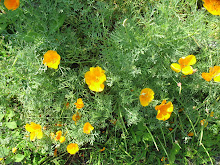
Some of the other perennials in bloom include pulmonaria, lemon balm, and pachysandra, and the hostas, ferns, and lily of the valley are poking out of the ground and starting to unfurl their leaves. After all of the dreary weather and flooding of the early spring, it's nice to see them return. It's too early to tell which diseases or pests will surface from this disruption from the norm, though I've heard we may be visited by an overabundance of winter moths.
Showing posts with label perennials. Show all posts
Saturday, April 24, 2010
Now in bloom at home
Some of the other perennials in bloom include pulmonaria, lemon balm, and pachysandra, and the hostas, ferns, and lily of the valley are poking out of the ground and starting to unfurl their leaves. After all of the dreary weather and flooding of the early spring, it's nice to see them return. It's too early to tell which diseases or pests will surface from this disruption from the norm, though I've heard we may be visited by an overabundance of winter moths.
Friday, January 22, 2010
Greenway Gardens at risk
These past couple of weeks have been marked by acts of generosity and community activism in the face of disastrous and threatening events. Many of us have opened our wallets to aid victims of Haiti's earthquake or picked by phones or signs in an attempt to sway the results of an uncomfortably close Senate election. These news items had been keeping me occupied when I received a request from a fellow Steering Committee member to become a fan of the newly-formed Facebook page, "Save Boston's Greenway Gardens."
I was a little surprised to learn that the gardens were at risk. After all, they were completed less than two years ago, thanks to a team of volunteer master gardeners, and, according to this LiveJournal entry, $850,000 provided by the Massachusetts Horticultural Society. The Rose Kennedy Greenway Gardens occupy three parcels of land in downtown Boston that was once shaded over by the elevated Central Artery, before the "Big Dig" rerouted the expressway underground.
Winding paths take pedestrians past an impressive arrangement of annuals and perennials, complete with discreet identification signs staked into the flower beds. The landscape of native perennials serves as a refreshing alternative to the typical public-space mass plantings that feature monotonous rows of petunias, impatiens, or other annuals that get ripped out at the end of a season. And the natives may inspire gardeners to give them a try in their own beds. I have only had a chance to rush down the path on my way to other destinations (hence the embarrassing lack of photos); now I'm concerned I may not get a chance to make a proper visit.
A different group, the Rose Kennedy Greenway Conservancy, was in alliance with MassHort, but now has other ideas. A non-profit that leases the land from the Commonwealth of Massachusetts, its plans call for more "active use," with a pavillion, a paved-over area for a farmers market, and even a skating rink.
Ripping out these lovely plantings would be a waste of all of the money and community effort put into this project. The Conservancy argues that the gardens would be expensive to maintain. There are other green spaces in the city that are watered regularly, and plants growing in their native habitat are more adapted to the climate and would presumably require less care. Would maintaining a building or a rink of ice that needs constant temperature control be cheaper? I don't think so.
Do we need these new facilities? There's already a skating rink on the Boston Common, and farmers markets in nearby Dewey Square, Copley Square, and other places. A public toilet somewhere on the Greenway might be nice, since they are scarce anyway, but there is already enough concrete. I think the fountain and seating in the nearby parcels will suffice.
Who knows what will get slipped by us before the gardening season begins. As I write this the Facebook page only has about as many fans as I have friends, with a little overlap, a number that's okay for an individual but not a cause. If you have any investment in this issue become a fan (if you're on Facebook), write to an official, or follow some of the other suggestions on the organization's web site.
I was a little surprised to learn that the gardens were at risk. After all, they were completed less than two years ago, thanks to a team of volunteer master gardeners, and, according to this LiveJournal entry, $850,000 provided by the Massachusetts Horticultural Society. The Rose Kennedy Greenway Gardens occupy three parcels of land in downtown Boston that was once shaded over by the elevated Central Artery, before the "Big Dig" rerouted the expressway underground.
Winding paths take pedestrians past an impressive arrangement of annuals and perennials, complete with discreet identification signs staked into the flower beds. The landscape of native perennials serves as a refreshing alternative to the typical public-space mass plantings that feature monotonous rows of petunias, impatiens, or other annuals that get ripped out at the end of a season. And the natives may inspire gardeners to give them a try in their own beds. I have only had a chance to rush down the path on my way to other destinations (hence the embarrassing lack of photos); now I'm concerned I may not get a chance to make a proper visit.
A different group, the Rose Kennedy Greenway Conservancy, was in alliance with MassHort, but now has other ideas. A non-profit that leases the land from the Commonwealth of Massachusetts, its plans call for more "active use," with a pavillion, a paved-over area for a farmers market, and even a skating rink.
Ripping out these lovely plantings would be a waste of all of the money and community effort put into this project. The Conservancy argues that the gardens would be expensive to maintain. There are other green spaces in the city that are watered regularly, and plants growing in their native habitat are more adapted to the climate and would presumably require less care. Would maintaining a building or a rink of ice that needs constant temperature control be cheaper? I don't think so.
Do we need these new facilities? There's already a skating rink on the Boston Common, and farmers markets in nearby Dewey Square, Copley Square, and other places. A public toilet somewhere on the Greenway might be nice, since they are scarce anyway, but there is already enough concrete. I think the fountain and seating in the nearby parcels will suffice.
Who knows what will get slipped by us before the gardening season begins. As I write this the Facebook page only has about as many fans as I have friends, with a little overlap, a number that's okay for an individual but not a cause. If you have any investment in this issue become a fan (if you're on Facebook), write to an official, or follow some of the other suggestions on the organization's web site.
Thursday, December 31, 2009
The year in gardening 2009/Resolutions for 2010
The past year may go down in history as one of the worst years in gardening, at least in the past decade. Above-average rainfall and below-average temperatures during the crucial months of the growing season resulted in a below-average yield, especially with tomatoes. In November, I abandoned my experiment of determining how much I benefited monetarily from planting and harvesting edibles, reporting a negative balance. And on some days, I spent more time clearing out infected fruits and vegetables than harvesting healthy ones.
However, I still find gardening to be a satisfying act, providing physical and emotional benefits to those who participate in it. Another year at the Minton Stable Community Garden led to more friendships with gardeners and other Steering Committee members. A community of bloggers provided advice and ideas for improving my garden practices as well. And the rain had some advantages, including a lower water bill for the community garden (only $141.82, down from last year's $203.40). As long as I have my 140 square feet in JP and land at home, and Massachusetts hasn't yet disappeared under rising sea levels, I'll continue gardening. Here is my second annual set of lists, with items not in any particular order.
Top 5 successful plants:
1. Kentucky Wonder pole beans
2. Fiesta organic broccoli
3. Forellenschluss Romaine lettuce (grown in Minton Stable Garden)
4. June-bearing strawberries (before the botrytis set in)
5. Volunteer raspberries--they liked the fall conditions
Top 5 failures:
1. All tomato varieties (except volunteer cherry tomatoes)--due to below-average temps and late blight
2. Anything I tried to grow in my backyard--too shady
3. Spinach after the invasion of leaf miners
4. Irises I tried to transplant to a sunnier location in front yard--maybe they'll bloom next year
5. Zinnias--planted late and not given enough room
Resolutions for 2010:
1. Continue growing the same volume of tomatoes, trying some different varieties, but make a point of pruning them to strengthen plants and ensure that they get more light.
2. Grow more varieties of broccoli, like Piricicaba and broccoli raab, and other plants, including kale and other greens, coriander, parsley, and other herbs, carrots, and cauliflower.
3. Reduce the size of the strawberry bed to make room for the raspberries.
4. Keep trying to achieve that fall crop of greens, perhaps by planting better varieties sooner, starting some indoors in August so they can grow out back under row covers, or by some other means.
5. Be more aggressive in thinning out perennials, to avoid diseases like powdery mildew or to keep them from taking over my MSG plot. Black-eyed susans, anyone?
6. Take better photos, including sharper close-ups and documentation of the garden over time.
Happy New Year! I'd be curious to read the resolutions of other gardeners.
Friday, December 25, 2009
Christmas day in the garden
The garden may be in hibernation, but in future posts I hope to outline the past year's successes and failures, provide updates on the possibility of keeping bees in the garden, and after the new season begins put up a few videos from 2010 garden events.
Thursday, October 29, 2009
Winterization bearing down
The deadline at the Minton Stable Garden for winterizing one's plot is November 1. By this date gardeners are expected to cut back perennials, clear out annuals, and remove all of the fencing, tools, supports, bags of soil, and other items. The water has been shut off for the season, and only one more work day has been scheduled for the unfortunate few still needing to fulfill their four-hour requirement (or else their plot will be given to one of the thirty people on the waiting list).
However, my raspberries and broccoli haven't received the memo. The rainy fall conditions have prolonged the growing season for both, with new berries for the former and the continued production of sideshoots for the latter. Otherwise, most everything else is ready to go. I had forgotten (or have been too embarrassed) to take a photo of my bean supports that fell over weeks ago. The tomatoes and peas are gone, and the perennials have been deadheaded but ready to be trimmed back completely. In about another week, material to be composted offsite will probably overflow on this tarp.
One of my post ideas for earlier this summer was to showcase the elaborate supports built by my fellow gardeners. Some have been taken down already while others have the skeletal remains of whatever they supported clinging to them. Grotesquely bulging and overripe beans. Blighted tomato stems rotting against metal rings. If not slimy to the touch then crinkling from dryness. It's a shame I never got around to executing this idea, but there's always next season.
Here are a few photos of what's still up. A lean-to that the creator had intended for cucumbers (notice the nice brussel sprouts next to it).
One substantial setup that once had peas climbing up strings, and still supporting the highest cosmos I've ever seen.
One of several pea trellises made from pipes, broomsticks, and chicken wire.
And one of my favorites: the arch connecting two raised beds designed for the handicapped. As in previous years, that will stay up throughout the winter, poking out from the snowbanks.
Here are a few photos of what's still up. A lean-to that the creator had intended for cucumbers (notice the nice brussel sprouts next to it).
Labels:
broccoli,
fall,
peas,
perennials,
pole beans,
raspberries,
work hours
Thursday, October 15, 2009
Garden Bloggers' Bloom Day - October
Despite a frost two nights ago that nearly killed half my basil, there is still color to be found, not just from the turning leaves. The zinnias at left, growing in my Minton Stable Garden plot, sustained a few battle scars but continue to persevere, but most of my blooms can be found in my gardens at home. One lone daisy remains, as well as a few cosmos that are growing along the sidewalk.
Sunday, September 27, 2009
Wildflowers in the rain
Saturday, August 15, 2009
Garden Bloggers' Bloom Day
Welcome to my first time participating in the Garden Bloggers' Bloom Day, which takes place on the 15th of each month. I have been aware of this ritual, started in the May Dreams Gardens blog, since earlier in the season but it had slipped my mind for one reason or another. This morning I will add my blog to the Mr. Linky widgit and weigh in. Due to limited time today, I won't make it over to the Minton Stable Garden, but that plot consists mostly of vegetables, and I have shown my perennials in recent posts. So I'll feature what has been growing at home.
Yesterday marked our eleventh anniversary of home ownership, so I'll begin with what had already been in the ground before our closing. My first stop is at the Rose of Sharon. The plant itself has doubled in size but the amount of shade we have has limited the number of blooms. In front of the house we have a hydrangea growing in our acidic soil (as one can tell by the blue color). A magnolia has been shading it out; as a result we see fewer blooms each year.
We have planted hostas here and there all over our property; at any time during the summer we can find one in bloom. The most spectacular at the moment is growing near our Rose of Sharon. Most of our backyard flowering plants are perennials but I usually throw in a few impatiens to add some extra color.
With more sun hitting the west side of our house, I was able to grow a sunflower which had originally been a volunteer in my MSG plot, but I had decided to move to make room for more vegetables. The blooming period for the beach rose you see behind it and to the left has past.
On the other side of the front yard, I have turned over the soil and started a perennial bed. The echinacea, daisies, and black-eyed susans were all divided from my mother's garden.
I have not planted a single cosmos seed here. Almost every summer we have been in the house, seeds have blown over from other gardens in the neighborhood. Before I started the perennial bed, we had let them grow on both sides of the walk. They used to completely take over and attack anyone who approached the front porch, but perhaps due to the weather this year, they are much more limited in height and scope.
The GBBD has given me an opportunity to take a closer look at what has been growing in my other gardens. Because the focus of this blog has been the Minton Stable Garden, and also due to the mosquito problem we have in our backyard, I have not gotten out enough to enjoy the fruits of my labor. I should put on my long pants and bug spray and get out there more often.
Tuesday, August 11, 2009
Around the Minton Stable Garden
It's been a while since I zoomed out of my own plot, so I spent a little time yesterday focusing on developments in other parts of the community garden. Most members have managed to keep out weeds and stay on top of their harvests. Echinacea, beebalm, phlox, and other perennials provide a variety of colors among all the green, and marigolds stand guard on the edges of many vegetable beds. A few tomatoes have reddened, while zucchini and squash are concealed under their leaves. The vines of pole beans have outgrown their trellises and in some cases begun to latch onto any nearby plants. The skeletal remains of spring peas still hang in some places, but all in all, plants are benefitting from the seasonal conditions that have often seemed the exception more than the rule.
At times gardeners find that their yield is much larger than they can enjoy themselves, and if they can't give away the excess, some of it goes to waste. In response to this as well as the needs of many others in our community, the Boston Gardeners' Council has begun a food donation initiative. Once a week, participating gardens collect any unwanted produce, which gets picked up and delivered to the Roxbury Food Pantry. Our system at the MSG involves leaving a cooler out the day before, locking it in the shed overnight and bringing it back out for pickup the next morning. At first the Steering Committee thought that at this point in the season we would not collect enough to warrant a pickup but have found the cooler to be full or near-full of zuchhini, swiss chard, and other goodies that we hope have reached those who would benefit from them.
The efforts from previous work days are now evident on the edges of the property. Sunflowers planted by the Dungarven Road fence conceal the chain link from anyone looking out from inside the garden, though as you can see in the above photo, they have lots of company. Meanwhile, along the back near the barbecue area, the raspberries divided and donated by a few members are on their way to a fruitful yield.
But some of the most interesting developments lie ahead. At the last Steering Committee meeting, we approved taking steps to restore and redesign a wildflower area over where the Minton Stable barn had once stood, in the southeastern corner of the property. The "Habitat Paddock" would contain wildflowers and native plants that attract butterflies and birds that may also populate neighboring Franklin Park. Although this zone appears to be somewhat established already, with echinacea and flowering weeds that have been spared by the lawn mower, what it really needs is a healthy layer of compost, carefully chosen plantings, and landscaping that works for both the wildlife and the people who would like to safely enjoy and learn from it. A subcommittee and future work days devoted to this project are just the beginning.
Wednesday, July 29, 2009
Plot update: Better Late Than Never edition
So, instead I'll blog about the usual. Life in my plot has been moving forward. The black-eyed susans are dominating as they did last year, the echinacea volunteers I inherited last season are proving themselves as an excellent cut flower. My Kentucky wonder pole beans are reaching the top of my trellis (see the rear of the above photo) and a few flowers have already appeared.
But the most encouraging news of my Monday photo shoot was about some plants that are behind schedule, due to the spring weather extending into summer and late sowing. They seem to be coming along nicely and I have decided to remain optimistic about the long-term.
Finally, it appears that I'll have a small patch of zinnias after all. I should probably clear away some of the invasive California poppies and black-eyed susans and give them some more sunlight and growing room.
Labels:
basil,
perennials,
raspberries,
Sounds of the Garden,
tomatoes,
zinnias
Monday, July 20, 2009
Bitter broccoli, besieged beebalm
My daughter wanted to try a little of the broccoli. Like she does with all of her veggies, she ate it raw, but she couldn't finish one little floret, because she found it "sour," then later declared it "really bad." I tried it raw, too, and yes, it had a very bitter, strong taste. I felt rather discouraged and regretted that I hadn't picked it sooner. However, I later stir-fried it with some chicken and snowpeas and it tasted alright. Sesame oil to the rescue.
Since we do not have a kitchen scale, we weighed our yield by the not-so-scientific method of having my daughter hold the bag of broccoli while standing on the bathroom scale and subtracting the weight, and then putting it on the scale by itself. Our estimate is that we had about 2 pounds, but since I haven't checked the price of organic broccoli lately, I'll have to postpone my harvest tally.
Sunday, June 7, 2009
Update on my plot
The advantage of the medium of blogging is the ability to bypass the editorial process and post news as it happens. However, today I find myself breaking this important rule to present you with photos taken three days ago (the horror!) and report on Thursday's and Saturday's MSG visits. Imagine if the Boston Globe waited until today to report an incident that occurred on Friday? Luckily, My Dirt is unhampered by the pressures to keep current or suffer from more financial consequences; when you have no budget, you have no budget to lose.
So with this in mind I'll keep to the business of earning through my harvest, which is now picking up, and I'll update you on the estimated value of my yield sometime this week. In the meantime, here's a photo of the first June-bearing strawberries, picked from my plot on Thursday. When I returned yesterday I filled a recycled pint container with more and picked four small heads of Romaine lettuce. I was rushing around on errands yesterday in preparation for company last night, so no time to take out the camera.
The leaf miner on my spinach had reappeared on most of the few leaves I had left remaining, so I pulled out all but my two healthiest plants. But my biggest concern was that a few of the lower leaves of my broccoli plants were showing a similar blight. On Thursday, I pulled off those leaves and took this photo of one of my plants out of concern for a few holes in the upper leaves. Luckily, there were no new signs of the blight yesterday, and, surveying the broccoli in other plots, I have come to believe that the holes are not necessarily a sign of danger (alternative interpretations are always welcome!).
In the flower department, I planted zinnia seeds in a new location, because I needed last year's space to start some Kentucky Wonder pole beans. Better late than never, I guess. No worries with the California poppies, however, they self-seed every year, and have been in bloom for the past week or so. One of the coolest features of this annual is the contrast between the papery bright-orange fully-opened flower and the way it looks closed, a delicate light-green cone served on a bubble-gum pink plate. As for my perennials, I can see the white beginnings of buds on my blanket flowers, the plants' eggplant-colored leaves can be seen in the right rear of the poppy photo.
I will finish this post now so I can take advantage of the glorious weather we are having; it would be sacrilegious to squander this opportunity by spending it in front of a screen. I'll leave you with my garden envy photo for this post: some irises from another MSG plot. I had never seen irises of this color, sort of a combination of sepia and pink.
Labels:
annuals,
blogging,
broccoli,
garden pests,
perennials,
strawberries,
zinnias
Subscribe to:
Posts (Atom)